Interstellar comet 3I/ATLAS holds record-breaking heavy hydrogen
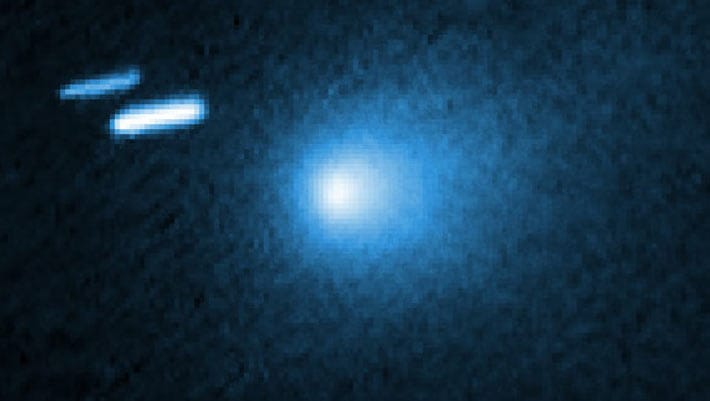
Astronomers using the James Webb Space Telescope have discovered something unusual in the icy makeup of 3I/ATLAS, a comet passing through our solar system from deep space. It contains methane with the highest levels of "heavy hydrogen" ever recorded in our neighborhood.
What is heavy hydrogen?
Hydrogen usually consists of a single proton. Deuterium is a heavier version of hydrogen that includes an extra neutron. By measuring the ratio of deuterium to regular hydrogen in a comet's ice, scientists can figure out the cold, harsh conditions where that comet first formed billions of years ago.
Why it matters
The amount of deuterium in 3I/ATLAS is about 14 times higher than what we have seen in other comets. This suggests the object formed in a distant star system with very different chemical conditions than our own.
Because 3I/ATLAS is a visitor from another star system, it acts like a messenger. By analyzing its chemistry, researchers are getting a rare, direct look at how planets and icy bodies are built in other parts of the galaxy. This discovery challenges current models of how star systems develop and shows just how diverse the chemistry of the universe can be.